- Mon - Sat 08:00AM-06:00PM
- Green Palms, Marist Lane, Karen, Nairobi
- Call: +254 723 773 634

Have you ever wondered why ice cubes float in a glass of water instead of sinking to the bottom? It may seem like a simple everyday observation, but the answer lies in one of water’s most fascinating scientific properties. Unlike most substances, water expands when it freezes, making solid ice less dense than liquid water. This unique characteristic explains why ice floats and why water behaves differently from many other liquids we encounter in our daily lives.
When water cools, its molecules move more slowly. As the temperature approaches freezing point, the molecules begin arranging themselves into a structured crystalline pattern. This structure occupies more space than the same amount of liquid water, causing ice to become less dense. Since less dense substances float in denser liquids, ice naturally remains on the surface of water rather than sinking.
“Water is unusual because it expands as it freezes, allowing ice to float and helping aquatic life survive in cold environments.”
This property is important far beyond the ice cubes in your favourite drink. When lakes and ponds freeze during cold weather, ice forms on the surface first. The layer of ice acts as insulation, slowing the loss of heat from the water below. As a result, the water underneath can remain liquid, creating conditions that allow fish and other aquatic organisms to survive throughout colder periods.
Water reaches its maximum density at approximately four degrees Celsius under normal atmospheric pressure. As it cools below this temperature, its density decreases, and when it freezes at zero degrees Celsius, the resulting ice is less dense still. This unusual behaviour helps explain why frozen water floats and why ice forms at the top of lakes rather than accumulating at the bottom.

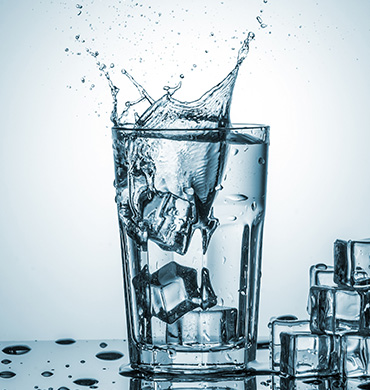
Understanding why ice floats also helps us appreciate the importance of water in supporting life on Earth. If ice sank instead of floating, lakes and ponds could freeze differently, potentially threatening aquatic ecosystems during prolonged cold periods. Water’s unusual freezing behaviour is therefore not merely an interesting scientific fact; it is one of the properties that makes our planet suitable for a wide variety of living organisms.
At Koola Brands, we appreciate the remarkable qualities of water and its essential role in everyday life. From the refreshing feel of a cold drink to the natural processes that sustain ecosystems, water continues to demonstrate how something familiar can have extraordinary properties. The next time you watch an ice cube float in a glass, remember that this simple sight reveals an important scientific principle.